


Skip to content
Topic Hub

Tax Optimization

Understand tax strategies, tradeoffs, planning opportunities, and the rules that may affect how much of your income you keep.

Expert-reviewed No product sales Evidence-led
Latest Insights

Latest Articles

Decision framework showing sell at vest versus hold company stock after RSUs vest

Should You Sell Your RSUs at Vest?

Shares vesting does not automatically make holding them the right call. This CPA-led framework separates the compensation-tax layer from the investment decision that starts the moment you own the shares — including how RSU withholding can differ from final tax liability and the cost-basis error that can cause tax to be paid twice.
September 2, 2026
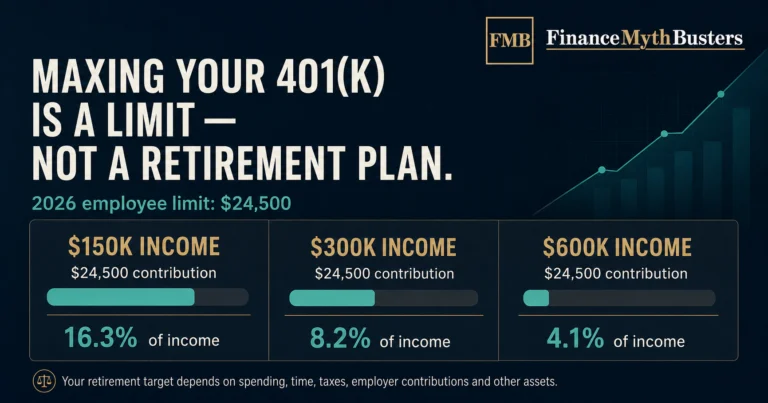
FinanceMythBusters graphic comparing the same 2026 401(k) maximum across different incomes to show why maxing a 401(k) does not guarantee retirement readiness.

Is Maxing Out Your 401(k) Enough for Retirement?

The 2026 employee contribution limit is $24,500. That is a tax-code ceiling, not a personalized retirement target. See the savings-rate math and two worked examples that reach opposite answers.

August 12, 2026
Key Tools

Tools & Calculators

View all tools →
Available

Withholding Safe Harbor Check

Find out whether your federal withholding is on track for safe harbor — and estimate what additional withholding may still be needed before year-end.

2 minutes Federal Withholding Check
Essential Resources

Resources

View all resources →
When RSUs vest as shares, holding them is the default.

Should You Sell Your RSUs at Vest?

It Depends

Read the Analysis
Common Questions

Questions About Tax Optimization

Does increasing my W-4 withholding help with a shortfall from earlier in the year?

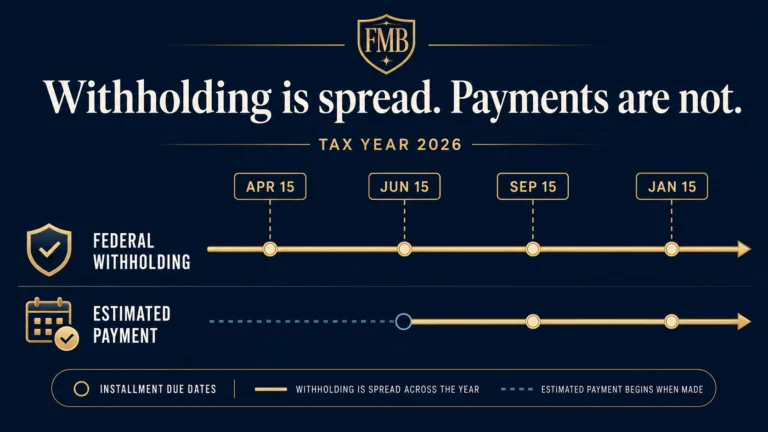
Generally, yes for federal underpayment-penalty purposes. Under the default Form 2210 treatment, federal income tax withholding is generally treated as paid ratably across the installment due dates. Increasing withholding later in the year can therefore increase the amount treated as paid for earlier installment periods. Estimated tax payments follow their actual payment timing instead.

Can I meet safe harbor and still owe money in April?

Yes. The safe-harbor benchmark is about underpayment-penalty exposure; it is not a calculation of your final balance due. If final tax exceeds the amount prepaid to reach the benchmark, the remainder can still be due when you file.

How do I know whether the 100% or 110% prior-year rule applies?

For 2026, the prior-year percentage generally becomes 110% when 2025 AGI was more than $150,000. The threshold is $75,000 when the taxpayer’s 2026 filing status is married filing separately. Special rules and exceptions can apply.

Do I have to file Form 2210?

Not always. In many ordinary cases the IRS can calculate the underpayment penalty. Form 2210 is required in certain situations, including use of special calculation methods or certain elections, such as electing to treat withholding on the dates it was actually withheld.

What should I do after maxing out my 401(k)?

Start by confirming the full employer contribution and reviewing cash reserves, high-interest debt and near-term liquidity. Depending on eligibility and plan features, other options can include an HSA, IRA or Roth strategy, voluntary after-tax 401(k) contributions and a taxable brokerage account. There is no universal account order.

What if my income arrived mostly late in the year?

The annualized income installment method may reduce the required payment for an earlier period when income was not earned evenly throughout the year. It requires additional calculations and Form 2210 with the return, so it is a different analysis from simply increasing payroll withholding.